The people who take part in the EuroGames come from a wide range of ages, identities, nationalities and socioeconomic backgrounds, reflecting the diversity of Europe's LGBTQIA+ community. At the same time, new research shows that some groups remain underrepresented, highlighting both the strengths and the challenges of creating truly inclusive sporting events.
These findings emerge from the Better in Colour, Better in Sports survey, conducted during EuroGames Lyon 2025. Researchers from Sapienza University of Rome collected responses from 527 participants aged between 15 and 81, providing one of the most detailed snapshots of who attends Europe's largest LGBTQIA+ multi-sport event.
A community spanning generations
LGBTQIA+ inclusive sport appeals to a wide age range, not just younger people. Participants included teenagers and individuals in their eighties, with an average age just below 40. This shows that inclusive sports attract people at various life stages.
Greater diversity is needed across gender identities and sexual orientations
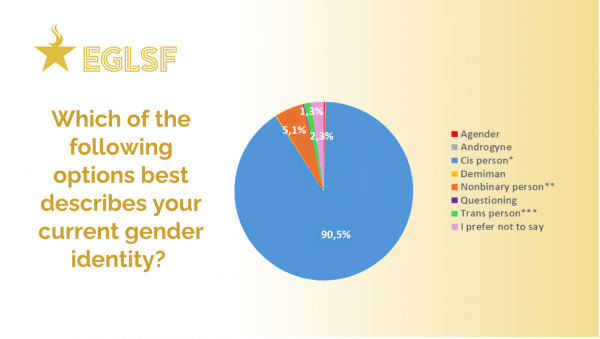
Most respondents identified as cisgender (90.5%), while 5.1% identified as non-binary and 1.3% as transgender. A small number described themselves using other gender identities, including agender and androgynous.
Around 70% of participants had been assigned male at birth, while just under 30% had been assigned female at birth.
The figures show that EuroGames successfully attracts attendees of all genders, with many viewing sport as a positive, identity-affirming experience, especially within queer-inclusive teams and events like EuroGames. However, trans and non-binary individuals still represent a small portion of participants. Despite facing some of the highest barriers to participating in sport, they remain underrepresented. The report also notes that trans and nonbinary people are more likely than cisgender LGB+ individuals to encounter barriers in sport.
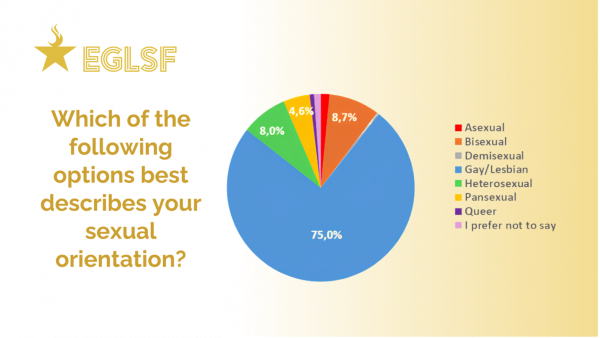
Three-quarters of respondents identified as gay or lesbian. Bisexual participants represented 8.7% of the sample, while 4.6% identified as pansexual and 8% identified as heterosexual, reflecting the event's inclusive approach to allies and diverse identities. Other participants identified as queer or demisexual.
Ethnic diversity remains limited

Although EuroGames attracts participants from many backgrounds, the survey suggests that ethnic diversity remains relatively limited.
More than three-quarters (77.4%) identified as White or Caucasian. Smaller proportions identified as Latin American or Hispanic (3.8%), Black or African/Afro-descendant (2.7%), East Asian (2.7%), Middle Eastern or North African (2.1%), or Mixed/Multiethnic (2.1%).
Nevertheless, almost one in four respondents (around 24%) said they perceive themselves as belonging to an ethnic minority within the country where they live, underlining that diversity extends beyond ethnicity alone and depends on local context.
A predominantly European event
The international character of the EuroGames is evident, but participation remains overwhelmingly European.
More than 91% of respondents came from European or other Western countries. Smaller groups travelled from South America (3.6%), Asia and the Middle East (3.2%), and North America (1.7%).
The findings highlight the event's strong European base while suggesting there is still potential to broaden participation from other regions of the world.
The survey revealed limited religious diversity, with nearly half of respondents indicating no religion or atheism, around 20% identifying as Christian, and a similar percentage as Roman Catholic.
Most participants are from average socioeconomic backgrounds
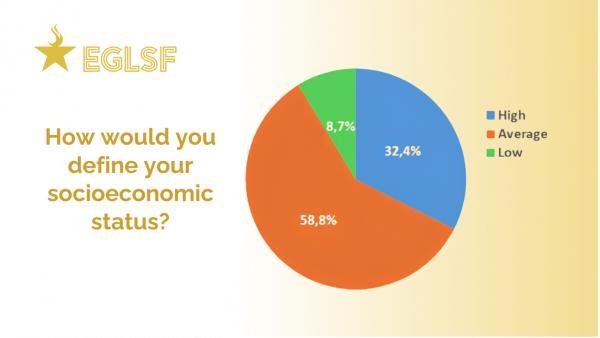
The survey also explored participants' socioeconomic status.
Nearly six in ten respondents described themselves as having an average socioeconomic background. Around one third reported a high or very high socioeconomic status, while only 9% described themselves as having a low or very low socioeconomic background.
This distribution may partly reflect the financial realities of attending an international sporting event, where travel, accommodation and registration costs can create barriers for people with fewer economic resources.
Towards a future of greater inclusion
Overall, the findings illustrate a sports community that unites individuals of different generations, identities, and social backgrounds. They also highlight opportunities for LGBTQIA+ sports organisations and even more mainstream clubs to enhance accessibility and representation.
The relatively low participation of trans and non-binary people, the limited ethnic diversity and the predominance of participants from the Western World all suggest there is still work to be done to ensure that inclusive sport is accessible to everyone. As the report concludes, queer-inclusive sporting spaces such as the EuroGames play an important role in fostering belonging, visibility and personal growth, but ensuring that these opportunities reach an even broader range of communities remains an important focus in the years to come.
Leave A Comment