In 2025, EGLSF implemented two Erasmus+ mobility projects, “Mindful Steps to Inclusion” in Spain and “Bridging, Breaking Barriers” in Morocco, involving nearly 60 youth workers from Europe and beyond. Both initiatives addressed growing challenges around exclusion, gender inequality, and hate speech, with a shared goal of strengthening youth workers’ capacity to support marginalised young people and foster inclusive communities.
Mindful Steps to Inclusion
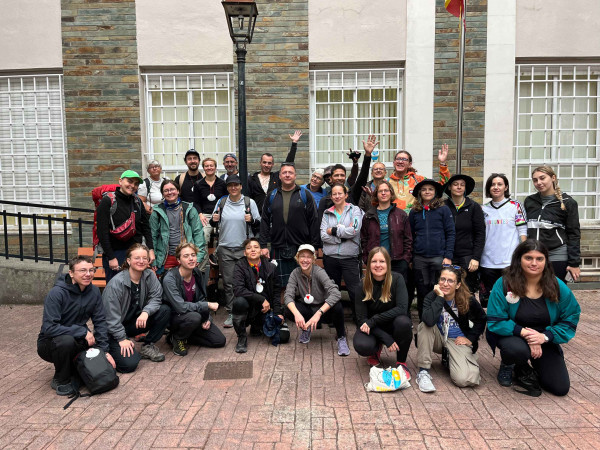
1–9 October 2025 | Galicia, Spain
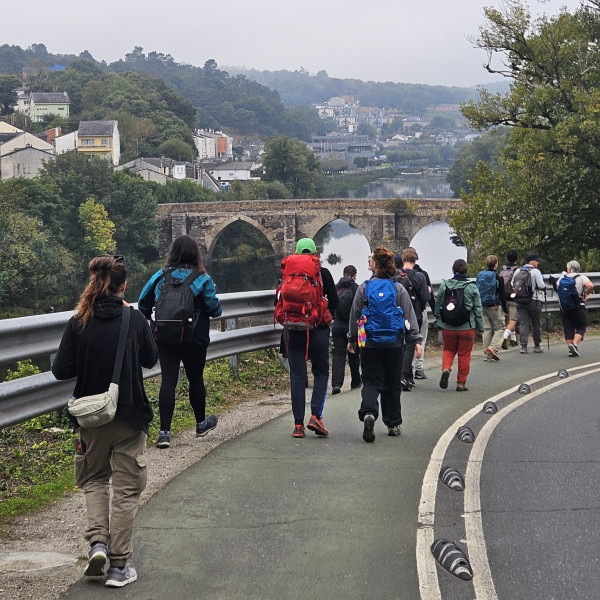
“Mindful Steps to Inclusion” was a training course for youth workers built around a shared journey on the Camino de Santiago. Thirty participants walked a 100 km route from Lugo to Santiago de Compostela, integrating outdoor education, mindfulness practices, and LGBTIQ+ inclusion initiatives.
The Camino offered a unique learning environment, allowing participants to slow down and engage with inclusion as a lived, collective experience. Guided reflection, group discussions, and creative learning methods complemented daily walking.
A central focus of the training was emotional resilience. Recognising the risk of burnout in youth work and activism, the project introduced mindfulness as a practical tool for sustainable engagement. Through walking meditation, journaling, and collective reflection, participants strengthened self-awareness, empathy, and emotional intelligence, skills essential for inclusive leadership.
Alongside the physical journey, participants explored national realities of LGBTIQ+ rights, inclusive advocacy in youth and sport contexts, and ways to integrate social justice education into outdoor activities. By the end of the training, participants developed concrete ideas to apply these approaches within their own organisations and communities. Walking together became a metaphor for the broader journey toward understanding, empathy, and inclusive community-building, one step at a time.
Bridging, Breaking Barriers

3–11 December 2025 | Marrakech, Morocco
The second Erasmus+ mobility project, “Bridging, Breaking Barriers,” focused on gender inequality and hate speech in increasingly polarised social and digital spaces. The training brought together youth workers and young activists from European Unione and Middle East and North Africa (MENA) countries, creating an intercultural space for exchange and cooperation.
Across both regions, young people, especially young women and youth with diverse gender identities, still encounter systemic barriers that hinder their access to education, participation, and leadership.
The project positioned youth work as a driver of structural change, addressing both individual empowerment and systemic discrimination. Participants strengthened their advocacy skills for gender equality and inclusion, explored inclusive policy dialogue, and examined the GAMMA+ model (Goal, Audience, Message, Messenger, Media and Action) as a framework for analysing online gender-related hate speech, which is widespread and often goes unchallenged.
Through workshops, peer learning, and digital advocacy labs, participants developed strategies to counter harmful narratives, support vulnerable youth, and lay the foundations for long-term collaboration between youth-led organisations in the EU and MENA regions.
Supporting Youth Workers as Change-Makers
The two Erasmus+ mobility projects together emphasise the significance of supporting youth workers both professionally and personally. One project concentrates on resilience, reflection, and experiential learning, while the other focuses on advocacy, dialogue, and collective action.
By investing in youth workers, these projects generate a multiplier effect that benefits not only the participants but also the communities and young people they serve through their daily efforts.
Leave A Comment