
Developing systems to prevent and protect athletes from hate speech across Europe
About the Project
Hate speech targeting LGBTIQ+ people remains one of the most pervasive and damaging forms of discrimination in sport. It silences athletes, drives people away from participation, and normalises a culture where exclusion and verbal violence are tolerated.
EOLHSS is a 36-month Erasmus+ Sport project led by the EGLSF together with universities, sport organisations, and human rights actors across Europe.
Our goal is simple and ambitious: to understand, prevent, and combat LGBTIQ+ hate speech in sport — and build the foundations for a lasting European Observatory.
Why This Matters
LGBTIQ+ athletes continue to face hate speech online, on the field, in the locker room, and across sport structures. Yet sport organisations often lack:
- the data to understand the scale of the problem,
- the tools to respond effectively, and
- the confidence to take action.
EOLHSS addresses this gap by combining research, awareness-raising, and practical interventions designed with and for sport actors.
Objectives
Overall Objective
To raise awareness of LGBTIQ+ hate speech in sport, address its underlying causes, and support the creation of safer, more inclusive grassroots sport cultures across Europe.
Specific Objectives
- Gather fresh, robust data on LGBTIQ+ hate speech in sport
- Raise public and institutional awareness about its impact
- Develop practical tools, standards, and remedies for sport organisers
- Empower LGBTIQ+ athletes and amplify their stories
- Lay the groundwork for a long-term European Observatory on LGBTIQ+ Hate Speech in Sports
Target Groups
- Sport organisers seeking to prevent discrimination
- LGBTIQ+ athletes and sport participants who face hate speech
- Grassroots sport structures committed to inclusive practice
Activities
The project is structured in five main Work Packages:
WP1 – Project Management
Coordination, financial management, communication tools, visual identity, language guidance, steering group, and sustainability planning.
WP2 – Data Collection & Analysis
Literature review, development of monitoring strategies, active monitoring of hate speech, data analysis, and public presentation of findings.
WP3 – Awareness Raising
Collecting personal stories, designing and executing a digital campaign, and amplifying the voices of LGBTIQ+ athletes affected by hate speech.
WP4 – Development of Interventions
Creation of standards, a self-evaluation tool, and an online training course; testing and refinement; mapping remedy pathways; and assessing impact.
WP5 – Dissemination & Accountability
Communication strategy, two European roundtables, a dissemination campaign, and a final conference to mobilise stakeholders and scale action.
Expected Outcomes
Short-Term
- A clear, evidence-based understanding of LGBTIQ+ hate speech in sport
- Increased visibility and public awareness
- New tools that sport organisations can start using immediately
Mid-Term
- Stronger standards for LGBTIQ+ inclusion across sport systems
- Motivated networks of practitioners, activists, and institutions
- A growing movement demanding accountability and systemic change
Long-Term
- The creation of a European Observatory on LGBTIQ+ Hate Speech in Sports, ensuring:
- ongoing monitoring and reporting
- support for affected athletes
- development of new interventions
- accountability mechanisms for sport organisations
A future where every LGBTIQ+ person can participate in sport without fear of abuse — online or offline.
Project Partners
- European Gay and Lesbian Sport Federation (EGLSF) - Coordinator, NL
- Université Lyon 1 Claude Bernard – France
- VIDC – Vienna Institute for International Dialogue and Cooperation – Austria
- Gezond en Ethisch Sporten (SportIQ) – Belgium
- International Workers and Amateurs in Sports Confederation (CSIT) – Austria




Funding
Programme: ERASMUS-SPORT-2025 - European Education and Culture Executive Agency (EACEA)

Funded by the European Union. Views and opinions expressed are however those of the author(s) only and do not necessarily reflect those of the European Union or the European Education and Culture Executive Agency (EACEA). Neither the European Union nor EACEA can be held responsible for them.
PROJECT NEWS
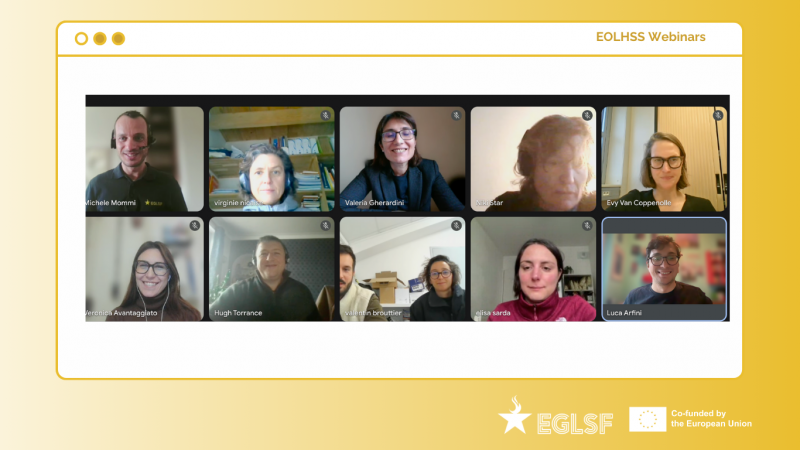
LGBTIQ+ Sport Observatory Steering Group Meets for the First Time
The LGBTIQ+ Sport Observatory project (EOLHSS) has officially launched its Steering Group activities with a first meeting on 18 June 2026, bringing together experts from academia, sport, and human rights organisations across Europe. The [...]
The LGBTIQ+ Sport Observatory Reveals its Visual Identity
The partners of the European Observatory on LGBTIQ+ Hate Speech in Sports (EOLHSS) have officially presented the project’s logo and visual identity during an online partnership meeting on 19 February 2026, marking an important [...]
PLUSS Final Meeting in Zagreb: Reflecting, Learning and Looking Ahead
From 16 to 18 January 2026, the partners of the Erasmus+ Sport project +PLUSS – LGBTQI+ Policy and Leadership in Sport and Society, led by the European Gay & Lesbian Sport Federation [...]
Leave A Comment