
About the project and the data collection
The main objective of the LBTI+ Women in Sport: Research & Outcomes (WSRO) project was to start creating research data to reflect the situation regarding participation and visibility of LBTI+ women in sport, as individuals, and through their participation in mainstream and in LGBTIQ+ sports organisations, promoting equality and European values in and through sport by highlighting the needs, barriers, and challenges that they are presented with. The project lasted from 2024 - 2025. Project partners are presented here below. The project was Funded by the European Union.
The first goal of the project was to produce survey questions and a format for focus group interviews, which would give more in-depth insights to the situation of LBTI+ women in sport.
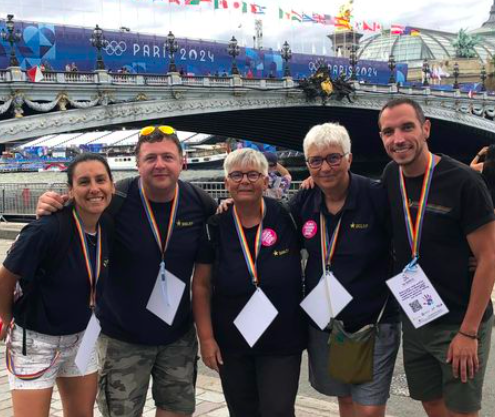
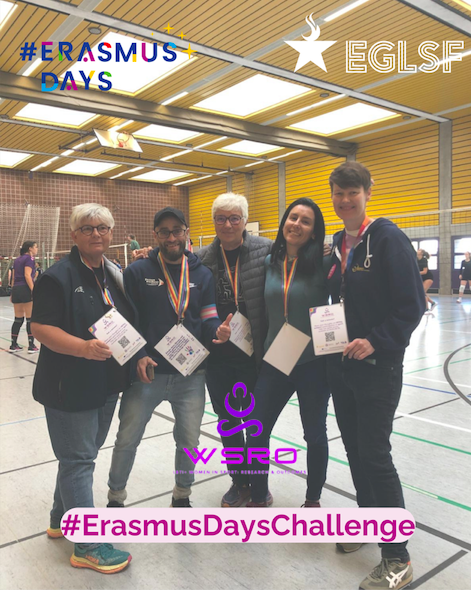
The responses to the project survey were gathered through online and in-person data collection from March 2024 to April 2025. We managed to collect over 1000 responses to the survey, which makes this a unique research as a European wide study of LBTI+ women's participation and experiences in sport. In addition, we did 23 focus groups and 14 individual interviews for example at events such as Donasport in Barcelona, EuroGames in Vienna, and Superelsencup in Berlin. Thank you all who contributed to this research!
Participant profiles
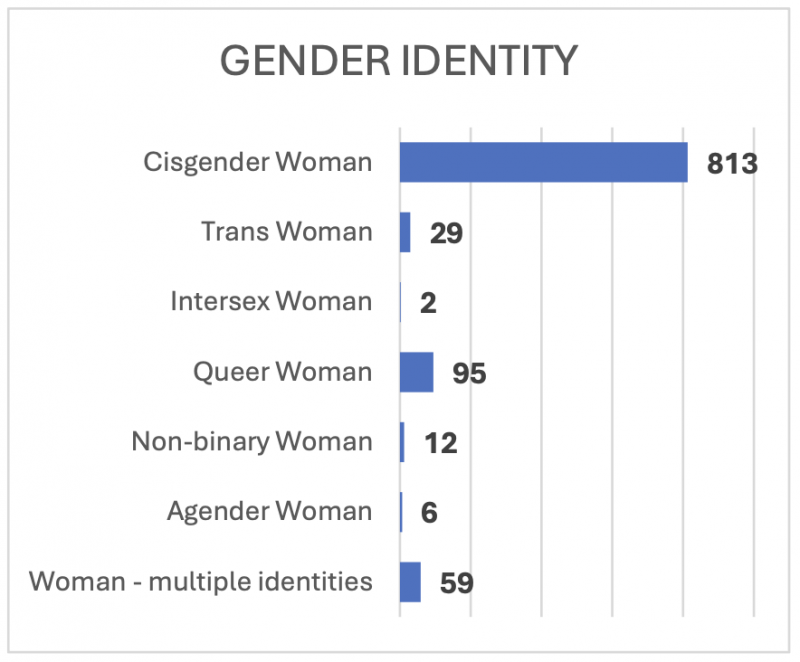
Among the 1,016 respondents, most identified as cisgender women (80%), but a significant portion represented gender-diverse identities, including trans, queer, non-binary, and agender women. The majority of participants were between 25 and 44 years old and came mainly from Germany, Spain, and France, reflecting the European scope of the project. In terms of sexual orientation, lesbian and bisexual identities predominated across all gender categories, confirming the relevance of intersectional approaches to understanding women’s participation in sport.
Key findings
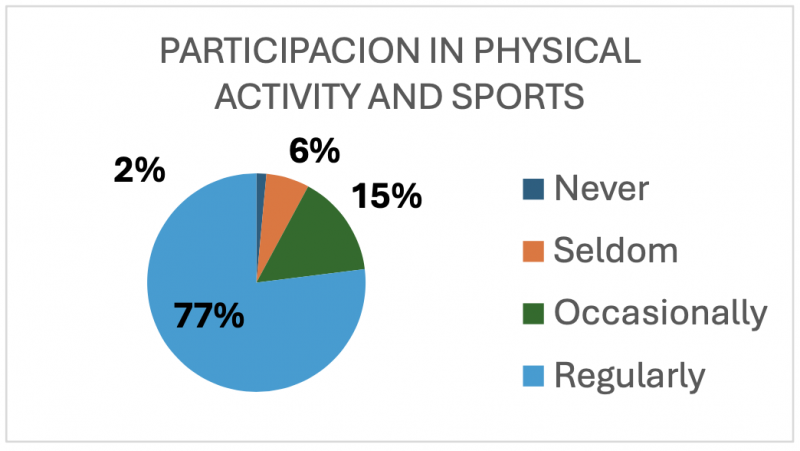
The WSRO survey highlights the diversity and complexity of LBTI+ women’s experiences in sport across Europe. Key findings show that nearly half of the women surveyed earned under €30,000 per year, and participation in sport increased notably with income levels. Despite 77% reporting regular physical activity, leadership roles remained rather unequal: 60% held no position within sport organisations, and for example 14% served as coaches and 13% as board members.
Harassment and discrimination persisted across settings, particularly for trans, non-binary, and women with disabilities, with 27% reporting uncomfortable experiences in sport, most commonly verbal or psychological. Reporting rates were low, with 70% choosing not to report it, largely due to fear, lack of trust, or absence of clear procedures, underscoring the need for effective anti-discrimination mechanisms and cultural change within sport institutions.
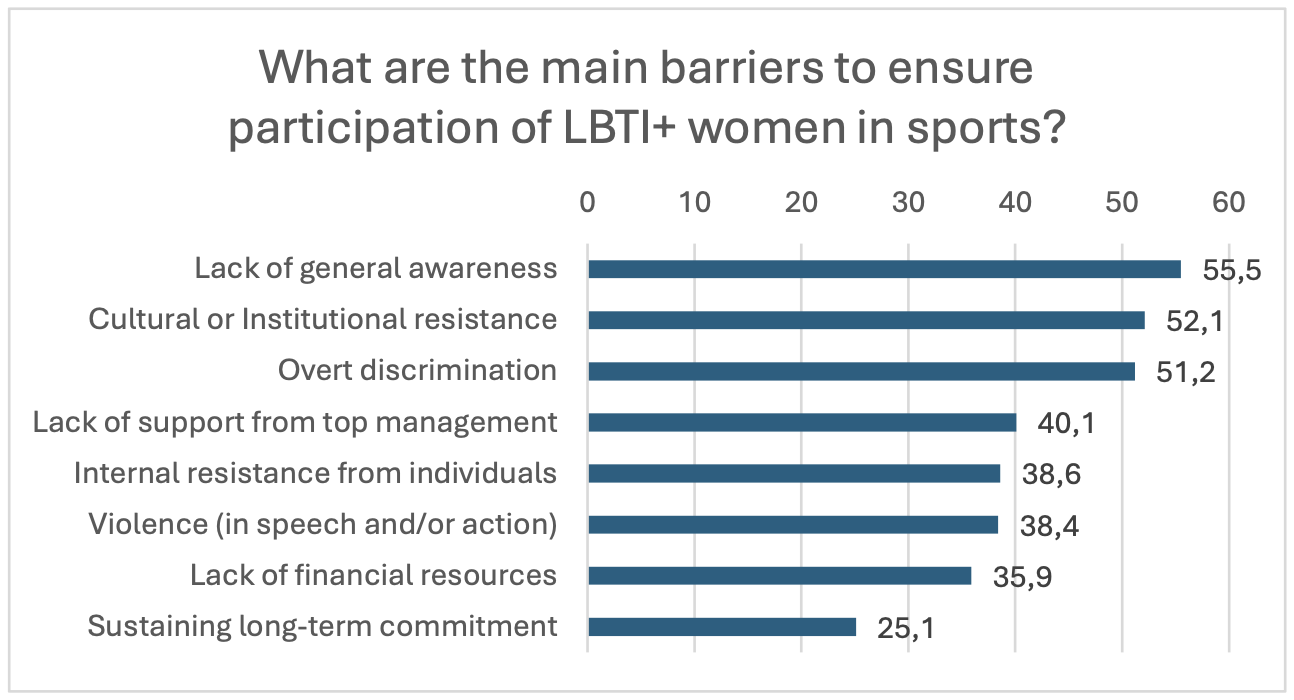
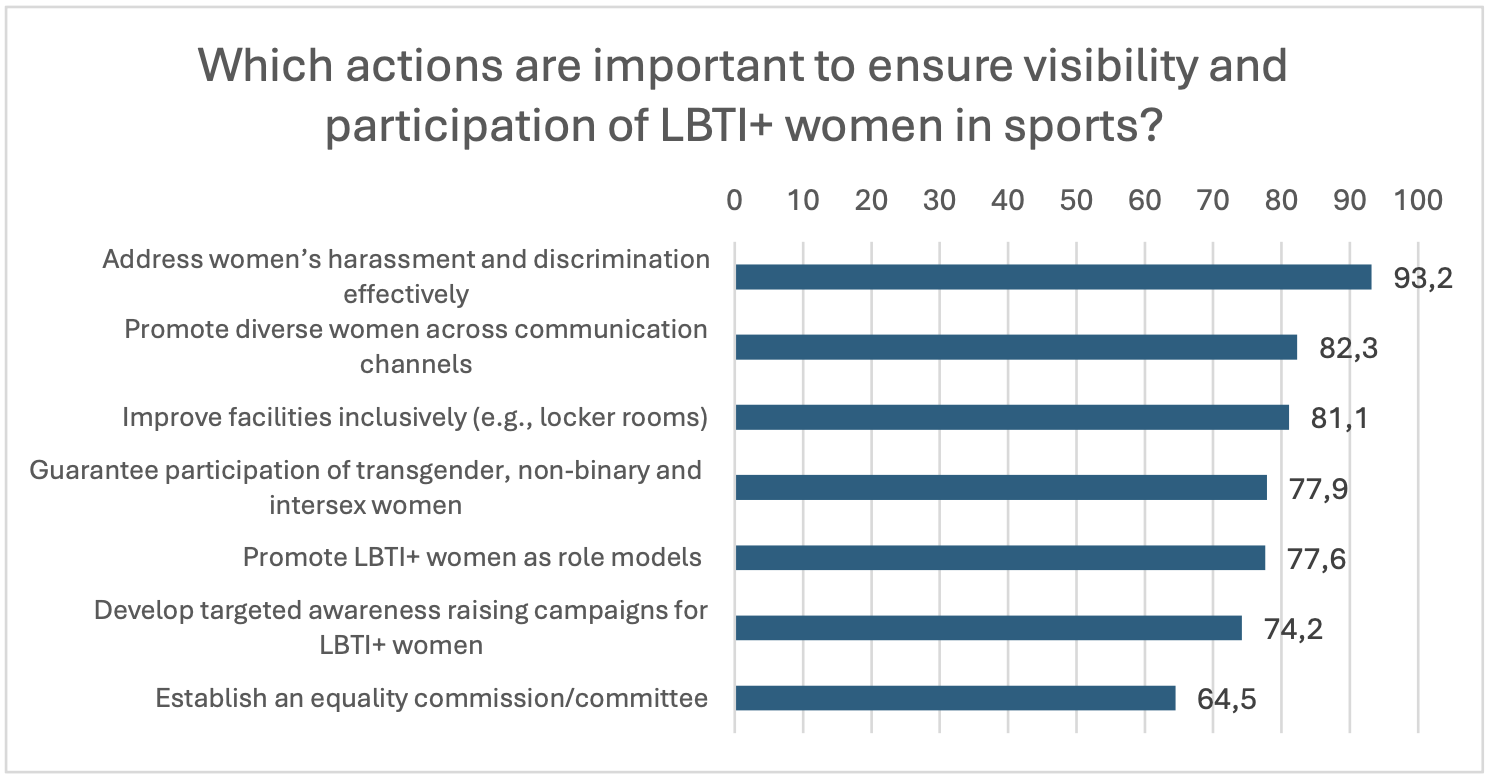
Participants described sport as a space for empowerment, community, and healing, but also one constrained by male-dominated structures, financial exclusion, and persistent transphobia and sexism. FLINTA initiatives emerged as vital safe spaces where LBTI+ women could express authenticity, solidarity, and joy. However, participants consistently called for institutional reforms: more inclusive governance, representation of diverse women in leadership, visibility of trans and intersex athletes, and sustained support for LBTI+ women-led projects. Together, the data and testimonies affirm that inclusion in sport requires not only participation but structural transformation, ensuring that all women, in their full diversity, can belong, lead, and thrive.
Next steps
Sharing the research results has already been started. Results were published for the first time when the project members held a dissemination workshop in Valencia, Spain on 25th October 2025 as part of the Annual General Assembly of the Federation of Gay Games. We are planning to continue putting e?ort to disseminate the research results and potential implementation actions to a wider audience, including European sport organisations, European institutions, academic organisations and local, national and international, small and mega-sport events. And as mentioned, the purpose is to use the data for further publications in an academic journals.
We have also started developing a network of sports organizations that want to promote the visibility of LBTI+ women in sports and use sport for change. This work is done within the LBTQI*Women*Active project. Promoting face-to-face meetings, in order to grow and strengthen the network, in specific sports events, such as the Olympic Games and EuroGames has taken place during the WSRO project, and will continue in the following major events.
Finally, the goal is to create a change towards fully inclusive sports for all through a European network of LBTI+ women who are aware of the issues and would be engaged in making a di?erence.
Stay tuned and follow us in social media: @wsro_project #WSRO.
Read the Full Report
A full and a short version of the research reports are available for download at the WSRO main page.
How to reference the results:
"Data collected and analysed by project WRSO - LBTI+ Women in Sport: Research & Outcomes, 101133332 — WRSO — ERASMUS-SPORT-2023-SCP, and the collaborative partnership of European Gay and Lesbian Sport Federation / EGLSF (the Netherlands), University of Valencia (Spain), and two local grassroots sport clubs: Activ’Elles (France) and Seitenwechsel (Germany)."
PROJECT PARTNERS
The project consortium comprises 4 organisations including University of Valencia, recognised for its research into LGBTIQ+ and gender equality issues, 2 local grassroots sport clubs from France (Activ’Elles) and Germany (Seitenwechsel) and European Gay and Lesbian Sport Federation (EGLSF), who represent LGBTIQ+ in Europe.

Funded by the European Union. Views and opinions expressed are however those of the author(s) only and do not necessarily reflect those of the European Union or the European Education and Culture Executive Agency (EACEA). Neither the European Union nor EACEA can be held responsible for them.
Leave A Comment